How to Relieve Neck Pain with Physical Therapy
A physical therapist first checks your neck to find the source of your discomfort. They then create a treatment plan that may combine hands-on care with simple exercises. Here are three common hands-on methods used to relieve neck pain.
Soft Tissue Mobilization
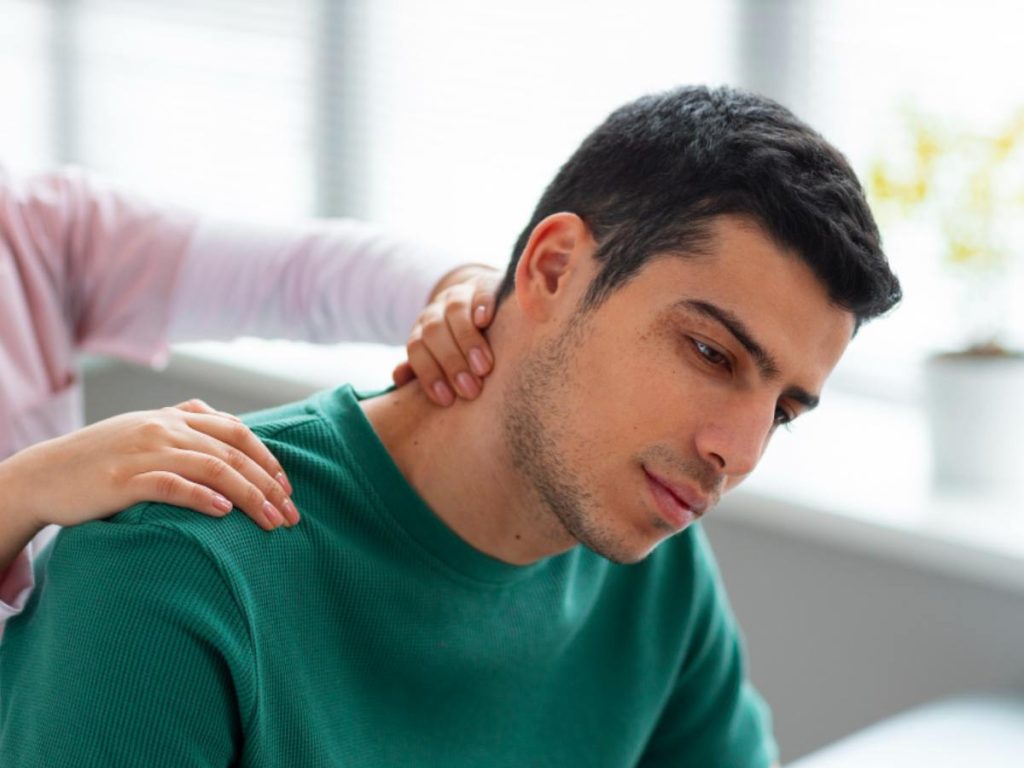
During this treatment, a physical therapist uses gentle pressure and movement on the muscles around your neck and shoulders. This helps relax tight muscles, reduce stiffness, and improve blood flow. It may also make it easier and less painful to turn or tilt your head.
Joint Mobilization
Here, a therapist moves your neck joints in slow, gentle, controlled ways. This can help stiff joints move more freely and may ease some of the tightness you feel when turning your head. Many people also notice it becomes easier to hold their head up straight after a few sessions.
Trigger Point Release
Trigger points are small, tight knots in a muscle. A therapist applies steady pressure to these knots to help them release, which may lower pain that spreads into the shoulder or upper back.
Every neck is different, so a therapist may use one, two, or all three of these methods, depending on what your body needs.
The Benefits of Physical Therapy for Neck
Here are the main benefits of physical therapy for neck pain:
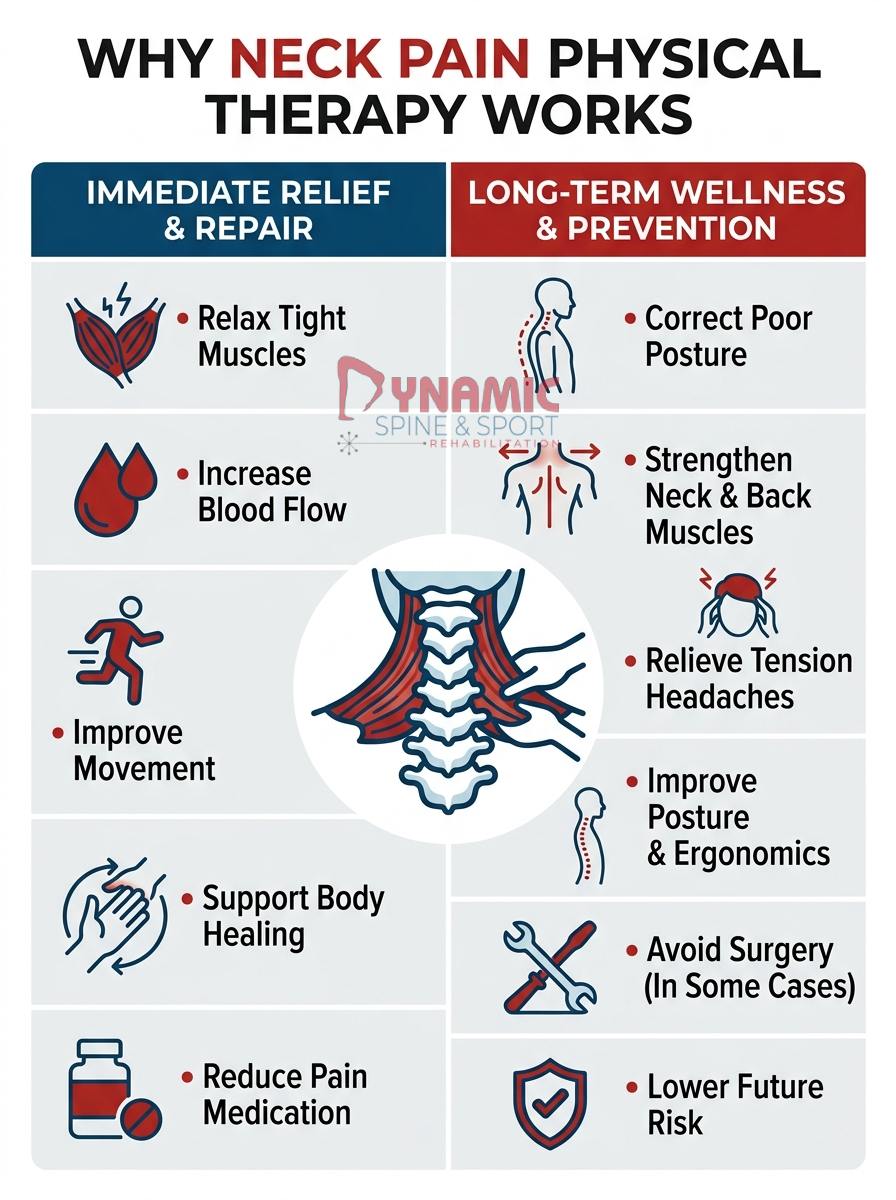
- Reduces neck pain and soreness.
- Relaxes tight neck and shoulder muscles.
- Improves neck movement and flexibility.
- Reduces stiffness in the neck joints.
- Strengthens the muscles that support the neck.
- Improves posture and body position.
- Makes it easier to turn and tilt your head.
- Reduces pressure on irritated nerves.
- Helps ease headaches caused by neck tension.
- Improves comfort during sleep.
- Makes daily tasks easier and less painful.
- Supports recovery after a neck injury.
- Teaches safe exercises you can do at home.
- Helps prevent neck pain from returning.
- May reduce the need for pain medicine.
- May help you avoid injections or surgery.
When Should You Consider Physical Therapy for Neck Pain?
Not every ache needs a therapist. But there are times when it makes sense to get checked out.
- Pain that lasts more than a week or two
- Stiffness that limits how far you can turn your head
- Pain that keeps coming back
- Neck pain after a fall, accident, or injury
- Pain that affects sleep or daily work
If numbness or tingling spreads into your arm or hand, it is worth getting checked sooner rather than later. A rehab provider can look closer at what nerves may be involved and guide next steps.
Final Thoughts
Neck pain does not have to be something you just live with. Neck pain physical therapy looks at what is causing the pain, whether that is tight muscles, stiff joints, or poor posture, and works to ease it at the source.
Along with hands-on care, a therapist can teach you simple habits, like how you sit at a desk or hold your phone, that help keep the pain from coming back. Most people see steady progress over a few weeks, though healing time can vary based on how long the pain has been there and what caused it.
At Dynamic Spine & Sport Rehabilitation, Joe Indrieri, PT, brings years of hands-on experience treating neck pain and a Master’s degree in Physical Therapy from UNLV. He built this clinic on the belief that patients heal best when a therapist takes the time to understand what is actually causing their pain, not just treat the symptoms. Our team builds a plan around your neck and your goals. Call us at 702-685-1607 or book online to get started.
FAQs
How does therapy restore mobility and stability?
A therapist uses hands-on work and exercise to loosen tight muscles, ease stiff joints, and build strength around the neck. This can help you move more freely and feel steadier over time.
How to cure neck pain fast?
There is no true fast cure. Gentle movement, rest from painful positions, and an evaluation from a physical therapist give you the best shot at real, lasting relief.
What is the best exercise to fix your neck problem?
There is no single best exercise for everyone. A physical therapist checks your neck and builds exercises around what your body actually needs.
Is physical therapy better than medication for neck pain?
They serve different purposes. Medication can ease pain short term, while physical therapy works on what is causing it. Many people use both together.
How many physical therapy sessions are needed for neck pain?
This depends on your symptoms and how your body responds. A therapist can give you a clearer timeline after your first evaluation.