Shock Wave Therapy for Plantar Fasciitis: Las Vegas Results
September 14, 2026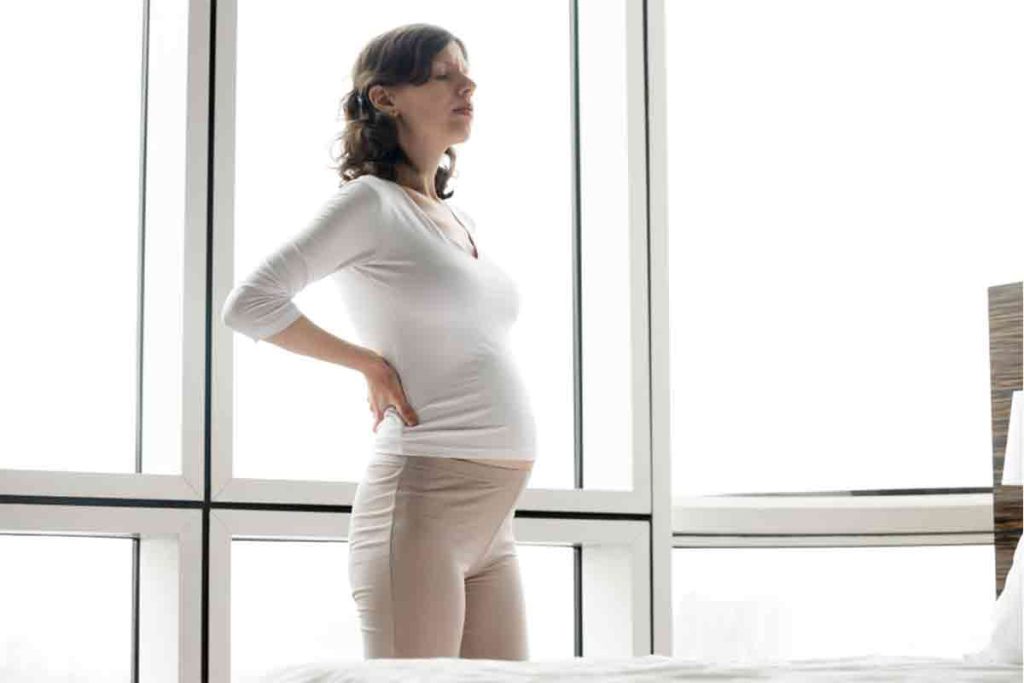
Hip pain pregnancy is a common symptom that you may experience. It usually comes from changes in your ligaments, weight, and posture, and hip pain during pregnancy often eases with simple steps such as better sleep positions, short rests, and gentle movement.
Hip pain during pregnancy is normal, and it often comes from changes that help your body get ready for birth. However, experts say it should never be ignored.
Call your prenatal provider today if the pain comes with bleeding, fever, leaking fluid, regular tightening, or swelling legs. Call 911 for chest pain or trouble breathing.
Why Does Your Hip Hurt When You Are Pregnant?
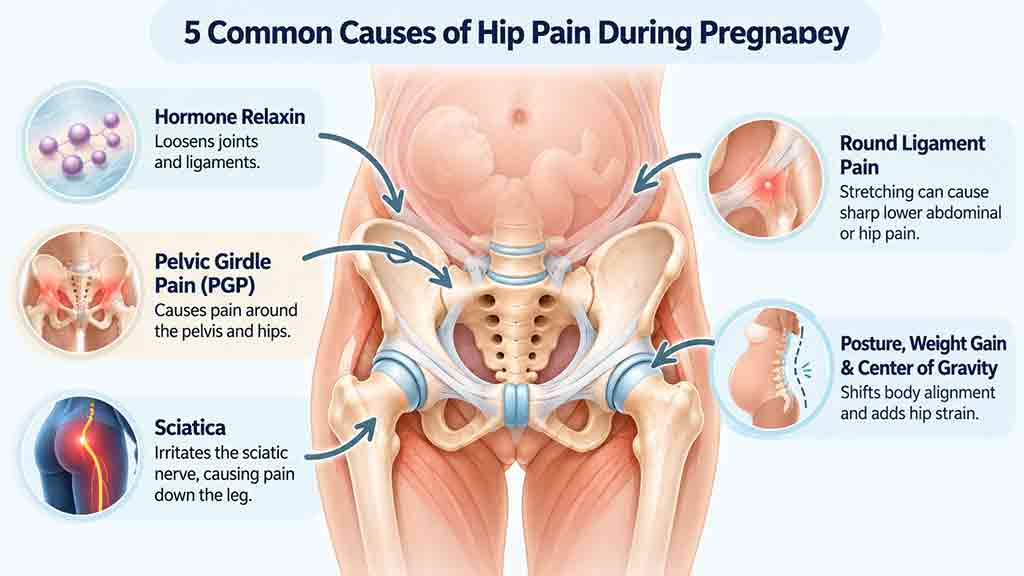
Pregnancy affects the hips because several ordinary changes act together. Let’s see what causes hip pain during pregnancy:
Hormone Relaxin
Relaxin is a hormone your body makes during pregnancy. It softens your ligaments and loosens the joints of your pelvis so your pelvis can open for birth. When those joints loosen, they move more than they did before. The muscles and ligaments around your hips then work harder to hold your pelvis steady. This extra work may strain them, and relaxin is thought to be one part of why hips ache in pregnancy, although the link is not proven.
Pelvic Girdle Pain (PGP)
Pelvic girdle pain is pain in the joints at the back or front of your pelvis. At the back, these are the sacroiliac joints. At the front, it is the pubic joint. Loose ligaments and the weight of the baby let these joints move out of step with each other. The joint and the muscles around it get irritated and tired. This causes a deep ache that is often worse when you walk, turn in bed, climb stairs, or stand on one leg.
Sciatica
The sciatic nerve runs from your lower back, through your buttock, and down each leg. As your uterus grows, it can press on this nerve or on the tissue around it. The baby’s position can add to the pressure. A squeezed nerve sends pain, tingling, or numbness along its path. You feel it in the buttock and down the leg, not only in the hip.
Round Ligament Pain
The round ligaments are two bands of tissue that run from the sides of your uterus to your groin. They hold the uterus in place. As the uterus grows, these bands stretch and get thinner. If you stand up or change position fast, they tighten quickly. This causes a short, sharp pull low in your belly or groin. It often starts in the second trimester.
Posture and Weight Gain and Center of Gravity
As your belly grows, your center of gravity moves forward. To stay balanced, you lean back and arch your lower back. Your belly muscles also stretch and get weaker, so they give less support. Extra weight adds more load on top of that. Your hips and lower back must carry more than they used to. The muscles and joints there tire, and they ache.
Where Does It Hurt? A Simple Guide to Pregnancy Hip and Pelvic Pain
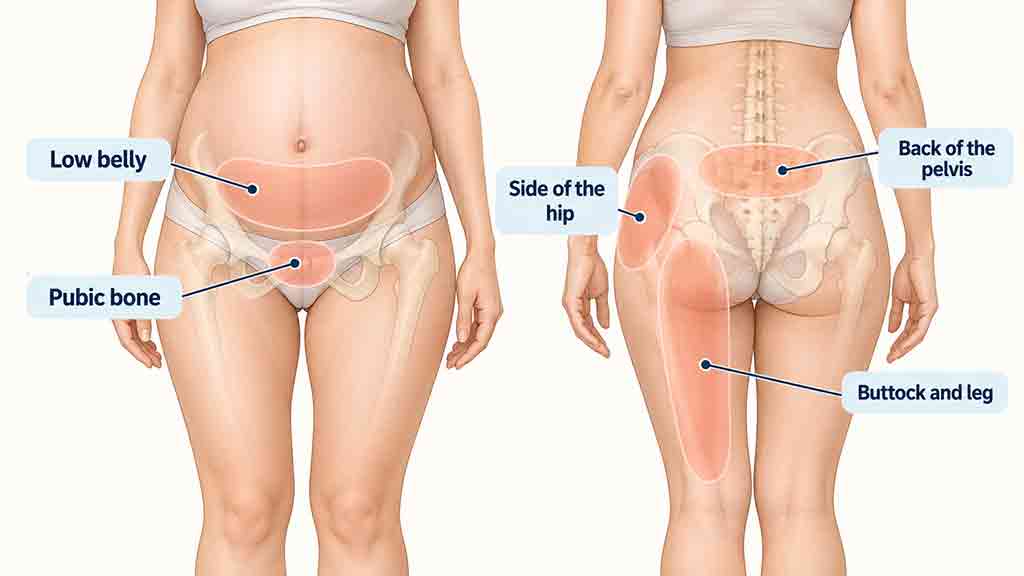
Pregnancy hip pain can come from several places, and where it sits is a useful clue. For example, left hip pain during pregnancy has the same causes as right hip pain, so the side alone tells you little. Match your pain to the place instead:
| Where it hurts | What it may be | What often helps |
| Side of the hip, worse when you lie on it or climb stairs | Outer-hip pain (greater trochanteric pain syndrome, GTPS) | Sleep on the other side, put a pillow between your knees, and avoid crossing your legs or standing on one hip |
| Deep ache low on one or both sides of the back of the pelvis, worse with turning, stairs, or standing on one leg | Pelvic girdle pain (sacroiliac joints) | Take shorter steps, rest between tasks, and do physical therapy exercises |
| Front of the pelvis at the pubic bone, sometimes with clicking | Pubic joint pain (symphysis pubis dysfunction) | Take smaller steps, keep your knees together when you turn in bed, and try heat or ice |
| Buttock pain that runs down the leg, with tingling or burning | Sciatica | Change position and move gently |
| A short, sharp pull low in the belly or groin when you change position fast | Round ligament pain | Slow down. It usually eases |
| Deep groin or hip pain with trouble putting weight on the leg | A hip joint problem such as transient osteoporosis of the hip. This is rare | Call your provider the same day. |
When Does Hip Pain Start in Pregnancy?
Hip pain often starts in the second or third trimester, but some people notice a mild ache earlier, even before their first prenatal visit.
Hip Pain Pregnancy First Trimester (Weeks 1 to 13)
A mild ache in the hip or pelvis can start in the first weeks, as your hormones rise and your ligaments begin to soften. It is usually mild at this stage. Bleeding, sharp pain on one side, or dizziness is different, so call your provider now if you notice any of these. Ectopic pregnancy symptoms usually start in the first trimester.
Hip Pain in the Second Trimester (Weeks 14 to 27)
This is when hip pain most often starts. Your belly grows, your posture changes, and your joints loosen further. You may first notice the pain when you climb stairs, turn in bed, or stand for a long time. It often comes and goes.
Hip Pain in the Third Trimester (Week 28 to Birth)
Hip pain during pregnancy 3rd trimester is often at its strongest. The baby’s weight and position press on your pelvis, and your center of gravity has shifted the most. It usually feels worst when you turn in bed, climb stairs, stand at work, or lie on one side at night. A warm pack goes on the hip, not on your belly. Regular tightening, leaking fluid, bleeding, or less baby movement is not a hip problem, so call your provider the same day.
Will hip pain during pregnancy go away?
For many people, hip pain eases after delivery, once the baby is born and the extra weight and pressure are gone. For some, it does not. If it has not eased, or if it changes how you walk or keeps you from sleeping, book a visit.
How to Sleep With Hip Pain During Pregnancy
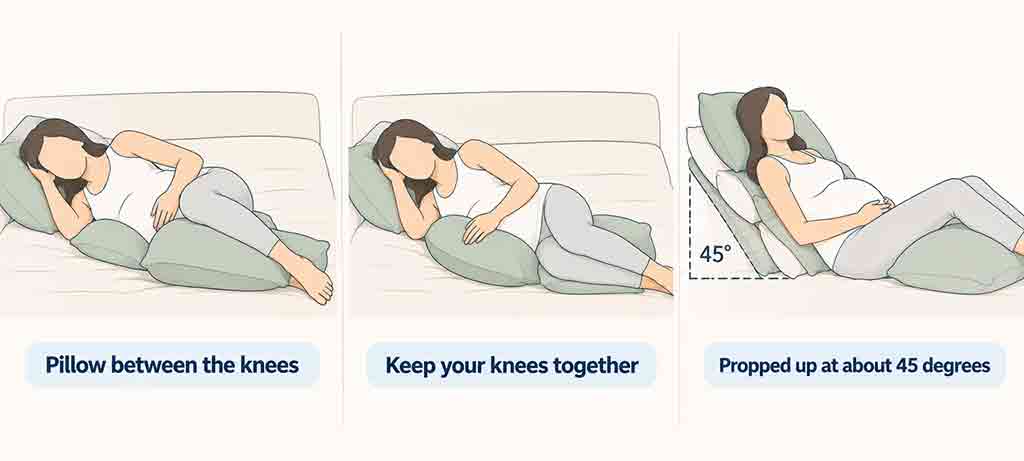
Hip pain can feel worse at night because lying on one hip for hours puts steady weight on the same joint. So if your sore hip wakes you, sleep with support. Putting a firm pregnancy pillow for hip pain between your knees can help keep your hips in line and take strain off your pelvis. Putting a second pillow under your belly can help too, and some people add a wedge or a full-length pregnancy pillow.
The best sleeping position for hip pain while pregnant is the one that keeps weight off the sore hip:
- If one hip hurts, lie on the opposite side.
- If both hips hurt, use pillows to support yourself in a reclined position at about 45 degrees (NHS Royal Berkshire).
- If the front of your pelvis hurts, keep your knees together when rolling over.
Sleeping Tips
Here are a few tips for sleeping with hip pain at night pregnancy:
- Move your legs and hips together when you turn.
- Do not cross your legs.
- Use a warm pack before bed, and never use a heating pad while you sleep.
- Sit on the edge of the bed, lie down on your side, and swing both legs up together.
- If pain wakes you most nights, book a visit.
How to Relieve Hip Pain During Pregnancy
Relieving hip pain pregnancy usually includes a mix of rest, support, movement, and good habits. None of it replaces a call when a warning sign shows up.
Applying Heat or Ice
Heat or ice can ease pain at the pubic joint. One NHS leaflet suggests heat for 10 to 20 minutes and ice for 5 to 10 minutes, with a cloth between your skin and the pack (NHS North Tees). For a heating pad pregnancy hip routine, keep it warm, not hot; keep it off your belly, and never fall asleep on it.
Wearing a Support Belt
A pregnancy belt for hip pain is a maternity support band that wraps around your hips and lower belly. It may take some strain off your pelvis. Some people find it helps, and the research is limited. Try it for short stretches, and ask a physical therapist or your prenatal provider to help you fit it.
Gentle Movement
Short walks, prenatal stretching, prenatal yoga, and water exercise can help if your prenatal provider says they are fine for you. In a review of 34 trials with 5,121 women, fewer women who exercised reported low-back and pelvic pain, and the certainty of that result was moderate (Cochrane).
Pregnancy raises the risk of heat illness (CDC), so you’d better limit outdoor activity to early morning or evening. Walk at cooler hours, try indoor laps at a mall or gym, find shade, drink water, and stop if you feel dizzy or faint.
Adjusting Daily Habits
Small habits take strain off your hips all day. Here are a few to try:
- Take short breaks and shorter steps.
- Sit with your feet flat, and do not cross your legs.
- Do not stand with your weight on one hip.
- Climb stairs one at a time.
- Keep your knees together when you get in and out of a car or bed.
Pain Relievers
Ask your prenatal provider before you take anything for pain. Acetaminophen (Tylenol) is one of the few pain options in pregnancy (ACOG acetaminophen statement). Ibuprofen and similar medicines (NSAIDs) are best avoided from 20 weeks on (FDA). Your provider can tell you what is right for you.
How Can Physical Therapy Help Hip Pain During Pregnancy?
Physical therapy can help reduce hip strain, improve movement, and make daily activities more comfortable. A therapist checks how your hips, pelvis, and back move, then tailors care to your needs through:
- Gentle exercises to strengthen supporting muscles.
- Stretches to ease tightness.
- Positioning tips for sleeping and getting out of bed.
- Guidance on lifting and moving with less strain.
Research is promising for exercise, while evidence for other treatments is limited. Results vary, and your prenatal provider should approve activity before you begin.
When to See a Doctor About Hip Pain During Pregnancy
Most hip pain in pregnancy is not an emergency, and knowing when to worry comes down to the signs in this table:
| When | Signs |
| Call 911 | Chest pain, trouble breathing, heavy bleeding, or fainting. |
| Get Urgent Medical Care | One leg is painful, swollen, red, or warm; new loss of bladder control with leg numbness or weakness. |
| Call Your Prenatal Provider today | Severe pain, difficulty bearing weight, numbness or weakness in a leg, sharp one-sided pain early in pregnancy, spotting, fever, painful urination, leaking fluid, regular contractions, or reduced baby movement. |
| Book a Visit Soon | Pain lasts more than two weeks, causes limping, disrupts sleep, or limits daily activities. |
Need Help With Hip Pain Pregnancy? Book a Visit
At Dynamic Spine & Sport Rehabilitation, we provide personalized physical therapy to help patients manage pain and move comfortably. For pregnant women with hip pain, treatment may include gentle strengthening, mobility exercises, posture guidance, and practical tips for sleeping, walking, and daily activities. We assess your symptoms and adapt care to your pregnancy stage, comfort, and prenatal provider’s recommendations.
Our founder and lead physical therapist, Joseph E. Indrieri, MSPT, DPT, has practiced since 2003, bringing more than 20 years of experience. His credentials include FAAOMPT and FAAMT fellowships, APTA and AAMT memberships, and service on the Nevada Physical Therapy Board for 2024–2027.
Visit us at Las Vegas (N Rainbow), Henderson, Spring Valley (Southwest Las Vegas), East Las Vegas (Lamb Blvd), or Downtown/Central Las Vegas.
Call 702-685-1607 to book an appointment and discuss how physical therapy may help ease your hip pain and make everyday movement more comfortable throughout your pregnancy.
This article is general information and does not replace care from your prenatal provider.
Frequently Asked Questions
Is hip pain normal in pregnancy?
Yes, hip pain is common, though study estimates vary because definitions differ. Simple steps can help. See your provider if pain is severe or persistent.
Is hip pain early pregnancy normal?
Mild aching can happen as your body changes. Call your prenatal provider the same day if you have bleeding, sharp one-sided pain, or dizziness.
What is the best sleeping position for hip pain during pregnancy?
Either side is fine; many doctors suggest the left. Lie on the opposite side of the sore hip, with pillows between your knees and under your belly. Avoid sleeping on your back after about 20 weeks (Sleep Foundation).
Is it safe to walk or exercise with hip pain while pregnant?
With your provider’s approval, try short walks and gentle movement. In Las Vegas, choose cooler hours and bring water. Stop and call your provider for dizziness, faintness, bleeding, leaking fluid, or regular tightening.
Can I take Tylenol or ibuprofen for hip pain during pregnancy?
Ask your provider before taking either. Acetaminophen (Tylenol) may be an option. Avoid ibuprofen and similar medicines from 20 weeks onward unless prescribed. Your provider can tell you how much to take.
Can hip pain be a sign of labor?
Sometimes, especially with regular tightening, cramps, pelvic pressure, low back pain, or leaking fluid. Call right away if these occur before 37 weeks, or contact your provider if unsure.
Will hip pain go away after the baby is born?
It often improves after delivery but can linger. Book a visit if it persists or affects walking or sleep. A physical therapist can assess the cause.
Can physical therapy help hip pain during pregnancy?
Yes. A physical therapist can assess your movement and teach gentle exercises. Research supports exercise more than many other treatments. Check with your prenatal provider before starting.