
Neck Pain Treatment: How Physical Therapy Helps Restore Movement
August 20, 2026

Runner’s Knee: Symptoms, Causes, and Treatment Options
August 31, 2026A ligament injury happens when the strong tissue that connects two bones stretches or tears. It can cause pain, swelling, weakness, and limited movement. Hyperbaric oxygen therapy increases oxygen in the blood, which may support tissue repair and reduce swelling. In this guide, Dynamic Spine & Sport Rehabilitation explains everything about hyperbaric oxygen for ligament injuries.

Table of Contents
ToggleHow Hyperbaric Oxygen May Help Ligament Injuries
Hyperbaric oxygen therapy increases the amount of oxygen in your blood. The blood carries this oxygen to the injured ligament and surrounding tissues. This may support cell repair and help the body control swelling.
HBOT may also support the growth of small blood vessels around the injured area. Better blood flow can bring nutrients needed for recovery. It may help you move more comfortably as you continue rehabilitation.
HBOT cannot reconnect a fully torn ligament. It works best as part of a complete care plan that may include rest, bracing, and physical therapy.
Benefits of Hyperbaric Oxygen Therapy for Ligament Healing
Ligaments need oxygen and nutrients to heal after an injury. Hyperbaric oxygen therapy increases the amount of oxygen carried in your blood. This may provide several benefits during ligament recovery:
- Increases oxygen in the blood
- Brings more oxygen to injured tissue
- Supports the body’s natural repair process
- May help reduce swelling
- Supports new blood vessel growth
- Helps damaged cells work properly
- May support collagen production
- May help protect nearby healthy tissue
- Can support recovery during physical therapy
- May help patients return to movement more comfortably
Ligament Injuries That May Benefit From HBOT
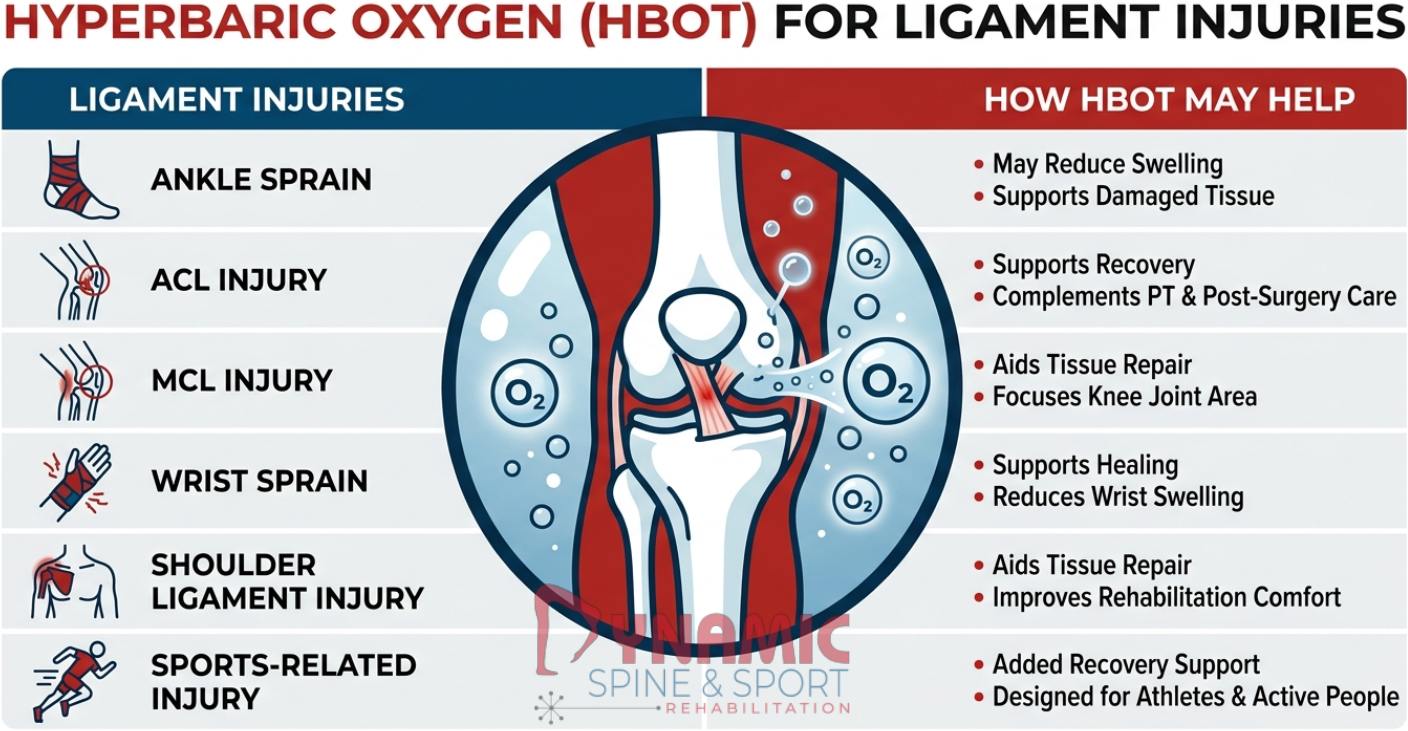
HBOT may support recovery from different ligament injuries. It can increase oxygen delivery to the injured area and may help the body manage swelling. A medical provider should examine the injury before recommending HBOT.
| Ligament Injury | How HBOT May Help |
| Ankle sprain | May reduce swelling and support damaged tissue |
| ACL injury | May support recovery alongside physical therapy or care after surgery |
| MCL injury | May help the body repair damaged tissue around the knee |
| Wrist sprain | May support healing and reduce swelling around the wrist |
| Shoulder ligament injury | May support tissue repair and improve comfort during rehabilitation |
| Sports-related ligament injury | May provide added recovery support for active people and athletes |
What to Expect During Hyperbaric Oxygen Therapy
A hyperbaric oxygen therapy session for a ligament injury usually takes about 60 to 120 minutes. The goal is to increase oxygen in your blood and support the injured tissue during recovery. HBOT may be used with rest, bracing, physical therapy, or other medical care. Here are the main steps you can expect:
- Your provider will check your ligament injury, symptoms, medical history, medications, and recovery goals. This helps them decide if HBOT is safe for you.
- You will enter the hyperbaric chamber and sit or lie in a comfortable position.
- The pressure inside the chamber will slowly rise. Your ears may feel full or pop, similar to what you feel on an airplane.
- You will relax and breathe normally during treatment. The added pressure helps your blood carry more oxygen to your injured ligament and nearby tissue.
- At the end of the session, the pressure will slowly return to normal. You can then leave the chamber and continue your recovery plan.
Some people feel tired or lightheaded after HBOT. You may also have a mild headache, ear discomfort, sinus pressure, or temporary vision changes. Tell your provider about all health conditions and medications before treatment.
When to Consider HBOT for a Ligament Injury
You may consider HBOT when your ligament injury does not improve as expected with rest and regular care. Talk to your healthcare provider before starting treatment. They can check your injury and decide if HBOT is suitable for you. You may consider it if:
- Your injury is taking longer than expected to improve
- Swelling continues to affect movement
- Pain makes rehabilitation difficult
- The injury limits work, sports, or daily tasks
- You want supportive care alongside physical therapy
- Your provider believes HBOT may fit your recovery plan
Final Thoughts
Hyperbaric oxygen therapy may be a useful part of your ligament injury recovery plan. At Dynamic Spine & Sport Rehabilitation, Joe Indrieri and our team can assess your injury and determine if HBOT is a good option for you.
Call 702-685-1607 or book an appointment online. We serve patients in North Rainbow Las Vegas, Henderson, East Las Vegas, Central Las Vegas, and Spring Valley.
FAQs
How Many HBOT Sessions May I Need?
The number depends on your injury, health, symptoms, and response to care. Your provider will recommend a schedule after evaluating you.
How Long Does Each HBOT Session Take?
Many sessions take about 60 to 120 minutes. The exact length depends on the chamber, treatment plan, and provider’s instructions.
Is Hyperbaric Oxygen Therapy Safe?
HBOT is generally well tolerated with proper supervision. Possible effects include ear pressure, fatigue, headaches, lightheadedness, and temporary vision changes.
Can Athletes Use HBOT for Ligament Injuries?
Athletes may use HBOT as supportive care. It should complement physical therapy and a gradual return-to-sport plan, not replace them.
Can I Combine HBOT With Physical Therapy?
Yes. HBOT may support recovery, while physical therapy helps improve strength, movement, balance, joint stability, and safe return to activity.
Where Can I Get HBOT for Ligament Injuries in Las Vegas?
Dynamic Spine & Sport Rehabilitation offers HBOT in Las Vegas. Schedule an evaluation to learn whether it may fit your recovery plan.