
Class IV Laser Therapy vs. Physical Therapy: What’s the Difference?
July 30, 2026
Spinal Stenosis Physical Therapy: Exercises and Treatment Options
August 6, 2026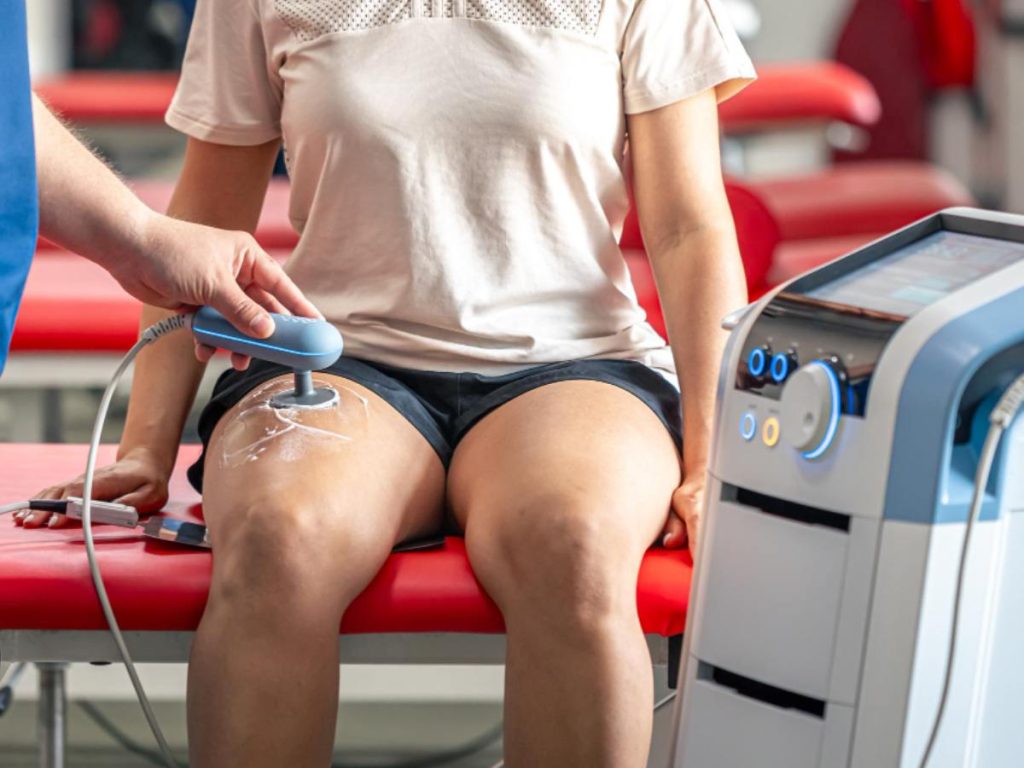
Author/Reviewed by: Joe Indrieri, PT
Clinic: Dynamic Spine & Sport Rehabilitation
Location: Las Vegas, NV
Pain in a tendon or joint often leads people to consider two common treatments, acoustic shockwave therapy and cortisone shots. Cortisone shots reduce pain and inflammation with a single injection, and acoustic shockwave therapy uses sound-based pressure waves to support the body’s own tissue repair over a series of sessions.
In this guide, Dynamic Spine & Sport Rehabilitation explains the differences between acoustic shockwave therapy vs cortisone shots, along with the research behind each option.
Table of Contents
ToggleHow Cortisone Injections Work
A cortisone shot is an injection of a strong anti-inflammatory medicine. A doctor places it directly into or near a sore joint, tendon, or bursa (a small fluid-filled cushion near a joint). The medicine calms inflammation and blocks pain signals, often within a few days.
Doctors commonly use cortisone shots to treat joint pain, tendon pain, arthritis pain, bursitis, and swelling from injury or overuse. Cortisone eases pain and swelling, but it does not repair the tissue causing the problem.
How Shockwave Therapy Works
Acoustic shockwave therapy sends sound-based pressure pulses through the skin and into muscle, tendon, and bone. It uses no needle and no incision. Doctors commonly use shockwave therapy to treat plantar fasciitis, tennis elbow, Achilles tendon pain, calcific shoulder pain, and other chronic tendon problems.
Each pulse creates a small amount of controlled stress at the injury site, which may support new blood vessel growth, collagen production, and tissue repair in areas that have stopped healing on their own.
5 Differences Between Shockwave Therapy and Cortisone Injections
Both treatments aim to reduce pain, but they work through different methods and produce different long-term results. The table below outlines the main differences between acoustic shockwave therapy vs cortisone shots.
| Factor | Acoustic Shockwave Therapy | Cortisone Shots |
| How it works | Sound pulses support tissue repair | Drug reduces inflammation and blocks pain |
| Invasiveness | No needle required | Requires a needle injection |
| Sessions needed | A series of 4 to 6 visits | Often one shot, sometimes repeated |
| Speed of relief | Gradual, over several weeks | Fast, often within days |
| Effect on tissue | Supports repair and collagen growth | Does not repair tissue |
| Repeat use | Can be repeated safely | Limited to a few shots per year per site |
Procedure
A cortisone shot takes only a few minutes. The provider cleans the skin, may numb the area, and injects the medicine directly into the sore spot. Most patients go home right after, with instructions to rest the area for a day or two.
Shockwave therapy takes longer overall, but each session itself lasts about 15 to 20 minutes. The provider moves a handheld device over the affected area, and the device sends pressure pulses into the tissue below. There is no needle and no numbing agent. Most patients need several sessions, usually once a week for four to six weeks, rather than a single visit.
Speed of Relief
A cortisone shot works fast. Most patients feel less pain within a day or two, and the relief keeps getting better over the next one to two weeks. Shockwave therapy takes more sessions to work. Many patients notice small changes after the first two or three visits, but the biggest improvement comes after the full series ends.
A 2025 study in the Journal of Orthopaedic Surgery and Research looked at people with tennis elbow. It found that shockwave therapy reduced pain more than cortisone shots or ultrasound therapy; however, it took longer to show results.
Candidates
Not everyone is a good fit for the same treatment. The right choice depends on the injury, how long it has lasted, and each patient’s health history. The table below shows who tends to do well with each option.
| Acoustic Shockwave Therapy | Cortisone Shots |
| Patients with a long-term tendon problem | Patients who need quick relief for a flare-up |
| Patients who tried rest and physical therapy without success | Patients with an upcoming event or deadline |
| Patients with plantar fasciitis, tennis elbow, or Achilles pain | Patients with a joint too painful to start other treatment |
| Patients who want to avoid needles | Patients with a single, well-defined problem area |
| Patients without a pacemaker or bleeding disorder | Patients who have not had several shots in the same spot already |
Pros and Cons
Each treatment has its own pros and cons. The right choice depends on your goal, your timeline, and your specific condition.
Cortisone Shots
Pros:
- Works fast, in a few days
- Costs less, since many insurance plans cover it
- Done in one quick visit
Cons:
- Relief does not last
- Repeat shots may weaken the tendon
- Does not fix the real problem causing the pain
Acoustic Shockwave Therapy
Pros:
- No needle, no drug side effects
- Helps the tissue heal for real
- Results tend to last longer
- Safe to repeat, no damage to the tissue
Cons:
- Needs several sessions to see full results
- Can cost more out of pocket, since some insurance plans do not cover it
- May cause mild soreness or bruising after treatment
Cost
Cortisone shots usually cost less. Most insurance plans cover 70% to 90% of the cost, since insurers view cortisone as a standard, medically necessary treatment. Shockwave therapy often costs more.
Most insurance plans cover 0% of the cost, since many insurers still treat it as elective or experimental. This means patients often pay the full cost themselves, and the total can add up since treatment usually needs several sessions instead of just one.
Which Treatment Is Right for You?
The right choice depends on your injury, how long you have had it, and what you want from treatment. Some patients need quick relief for a short-term problem, while others need a treatment that fixes a long-term issue. The lists below show which treatment tends to fit each situation.
Cortisone shots are often a good fit for:
- Bursitis
- Frozen shoulder pain
- Carpal tunnel pain
- Gout flare-ups
- Knee osteoarthritis pain flare-ups
Shockwave therapy is often a good fit for:
- Calcific shoulder pain
- Hip pain from tight hip tissue (greater trochanteric pain syndrome)
- Jumper’s knee (patellar tendon pain)
- Shin splints
- Slow-healing sports injuries
Get Care That Actually Fits Your Injury
At Dynamic Spine & Sport Rehabilitation, we do more than offer treatments; we build a plan around your body, your injury, and your goals. Our founder, Joseph Indrieri, PT, holds a Master’s degree in Physical Therapy from UNLV and has spent years helping patients get real, lasting relief instead of a quick fix. We take the time to find the right treatment for you before we recommend cortisone, shockwave therapy, or another option.
Call us today at 702-685-1607 to schedule your visit. We proudly serve the Las Vegas area with five convenient locations:
- Spring Valley
- Las Vegas (N Rainbow)
- Henderson
- East Las Vegas (Lamb Blvd)
- Downtown/Central Las Vegas
Final Thoughts
Acoustic shockwave therapy vs cortisone shots do different jobs. A cortisone shot gives fast relief from pain and swelling. Shockwave therapy takes more time, but it works on the tissue itself and often gives relief that lasts longer. The best choice depends on your injury and what you want out of treatment. A full checkup is the best way to find the right option for you.
FAQs
Is shockwave therapy better than cortisone injection?
Shockwave therapy produces longer-lasting results for chronic tendon conditions. Cortisone provides faster short-term relief, so the better option depends on the condition.
What is the success rate of acoustic wave therapy?
Research reports success rates between 65 and 85 percent for conditions such as plantar fasciitis and tennis elbow, though results vary by patient and condition.
How long does acoustic wave therapy last?
Many patients maintain improvement for a year or longer after completing a full treatment series, since the therapy supports lasting tissue repair.
Is there a downside to shockwave therapy?
Yes, it requires multiple sessions and may cause mild soreness or bruising, and some insurance plans do not cover the cost.
Who should avoid shockwave therapy?
Patients with a pacemaker, a bleeding disorder, an active infection at the treatment site, or pregnancy should avoid shockwave therapy and discuss alternative options with a provider.

Related posts