
Updated: 08/31/2026
Maybe you just left a doctor’s appointment with a referral for physical therapy, or you noticed your balance isn’t what it used to be, or a parent has started struggling with stairs or getting up from a chair. You’re trying to figure out if physical therapy actually applies to your situation.
Physical therapy for seniors is a licensed, evaluation-based treatment for pain, weakness, balance problems, and loss of mobility. It is not just something you do after surgery. It can help at any stage, including before a fall or injury happens, not only after one. This guide explains what physical therapy for senior citizens treats, what a visit looks like, and how Medicare covers it in 2026.
Table of Contents
ToggleWhat Is Physical Therapy for Seniors?
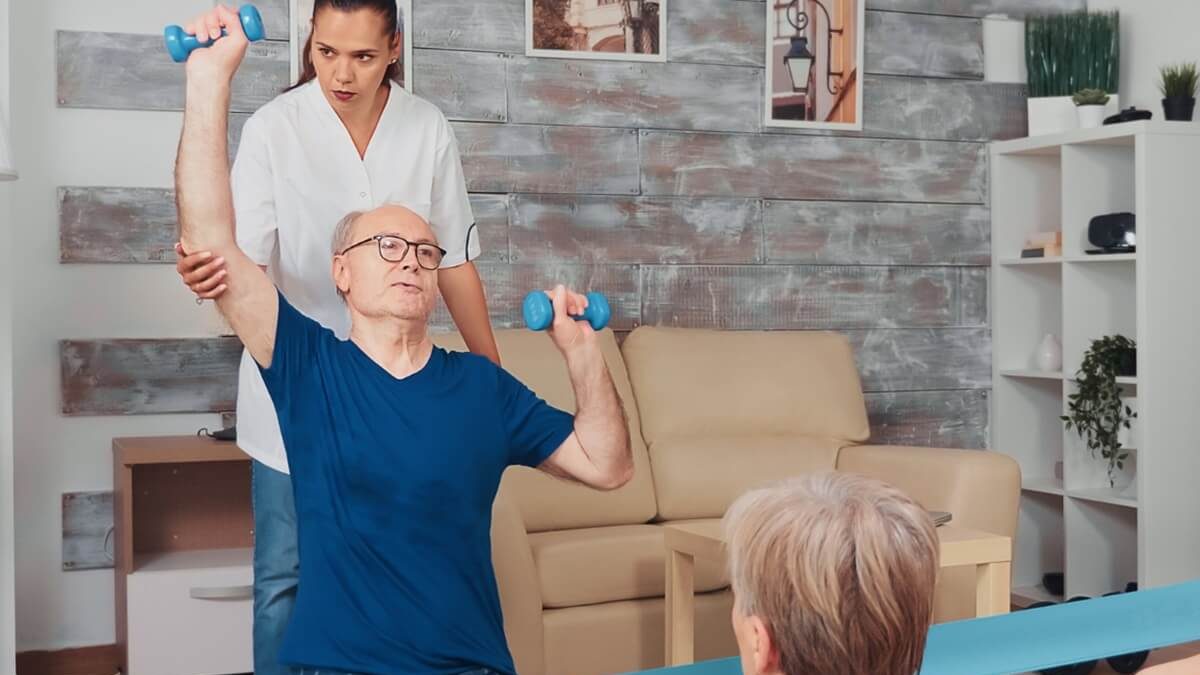
Also called geriatric physical therapy, it’s hands-on care led by a licensed physical therapist. It focuses on the balance, strength, and mobility needs that come up most often in older adults. The therapist first evaluates your strength, balance, gait, and range of motion. Then your therapist builds a plan of care made for your specific needs, not a one-size-fits-all program.
What Conditions Does It Treat?
Physiotherapy for the elderly treats many specific conditions, not just recovery after surgery. Common conditions include:

If you see your own situation on this list, physical therapy may be able to help. You do not need a major diagnosis to qualify for care.
Benefits of Physical Therapy for Seniors
Physical therapy for elderly patients is often associated with benefits like:
- Lowering the risk of falling at home
- Gaining more independence with daily tasks
- Needing less pain medication over time
- Recovering faster after surgery or a hospital stay
- Improving mobility over the long term
Fall risk is one of the biggest reasons physical therapy matters for older adults. More than 1 in 4 adults age 65 and older falls each year, and falls are the leading cause of injury-related emergency room visits in this age group (CDC). Falls also cause about 3 million emergency room visits and about 1 million hospital stays a year, including about 319,000 stays for hip fractures (CDC). A physical therapist builds a plan that targets the balance and strength issues behind these falls before they happen.
What to Expect at an Evaluation and in a Typical Plan
Many people put off physical therapy simply because they do not know what happens at a visit. Here is what a first visit usually includes:
Geriatric physical therapy sessions are paced to your current ability. This is not a generic workout. Your therapist adjusts the plan as your strength and balance improve.
Physical Therapy Exercises for Seniors
Senior physical therapy exercises are chosen based on your specific condition. Common types include:
- Balance and fall prevention exercises for seniors, such as standing on one foot near a counter or walking heel to toe.
- Gentle strength exercises for joint pain or after surgery, such as seated leg lifts or wall push-ups.
- Stretching for flexibility and stiffness, such as slow shoulder rolls or calf stretches.
- Gait practice for stroke or Parkinson’s related mobility loss, such as walking with marked steps or practicing turns.
A plan may also use simple equipment such as resistance bands, light weights, a stability surface, parallel bars, or a stationary bike. Your therapist chooses what fits your goals. You do not need any special equipment at home to get started.
What Exercises Should Older Adults Avoid?
Some exercises are not right for older adults, especially without guidance. These include:
- High-impact moves that strain the joints, such as jumping or running on hard surfaces.
- Balance exercises done alone when balance is already a concern, such as standing on one foot with nothing nearby to hold.
- Deep twisting or bending that can aggravate osteoporosis, such as touching your toes with straight knees.
- Any exercise that causes sharp pain, not normal muscle tiredness.
In-Home vs. In-Clinic Physical Therapy
Physio for the elderly can happen at home or in a clinic. Neither option is better for everyone. It depends on your situation. On the other hand, in-home physical therapy for seniors works well if you have limited mobility or transportation, or if you just left the hospital. In-clinic visits give you access to more equipment and a broader plan as your strength improves. Many people start with one option and move to the other as their needs change.
Does Medicare Cover Physical Therapy for Seniors?
Medicare Part B covers physical therapy that is medically necessary. For 2026, Medicare set a combined threshold of $2,480 for physical therapy and speech-language pathology services (CMS). After you reach that amount, your provider must document that continued care is still medically necessary in order to keep billing Medicare.
This is not a hard yearly cap. Your care can continue past that amount as long as it is documented. Coverage still varies by plan, so it is worth confirming your specific coverage with your provider’s office.
How Many Sessions Does PT for Seniors Usually Take?
Most plans run 6 to 12 weeks, with one to three visits a week. The exact number depends on your condition and how quickly your strength and balance improve. Your therapist checks your progress regularly and adjusts the plan instead of committing to a fixed number of visits up front.
When Should Seniors See a Physical Therapist?
Consider physical therapy if you notice:
If two or more of these apply to you or someone you care for, talk to a doctor or physical therapist. Catching these signs early often makes treatment easier and shorter.
Physical Therapy for Seniors Near Me in Las Vegas
Dynamic Spine & Sport Rehabilitation works with older adults on balance, fall risk, orthopedic, and post-surgical needs. Evaluations are available at several Las Vegas-area locations, so getting started is convenient no matter where you live.
Our physical therapist for seniors is Joseph E. Indrieri, MSPT, DPT, founder and lead physical therapist at Dynamic Spine & Sport Rehabilitation. He is a Nevada Physical Therapy Board member for the 2024 to 2027 term, and belongs to the American Physical Therapy Association and the American Academy of Manual Therapists. He holds fellowship status through FAAOMPT and FAAMT, with over 20 years of experience since 2003.
Book your evaluation by calling our physical therapy center in Las Vegas at 702-685-1607. Dynamic Spine & Sport Rehabilitation offers physical rehab for seniors in Las Vegas, Henderson, East Las Vegas, Downtown Las Vegas, and Spring Valley.
FAQs
What is physical therapy for old people called?
It is most often called geriatric physical therapy. It is the same licensed service, just focused on the balance, strength, and mobility needs common in older adults.
What should a 70-year-old be doing every day at home?
A daily routine with some walking, gentle strength work, and balance practice helps most older adults. The exact exercises depend on your current strength and health, which is why a short evaluation gives better guidance than a generic list.
What are the physical therapy activities for seniors?
Common activities include balance and gait training, strength exercises using light resistance or body weight, stretching for flexibility, and practice with everyday tasks like standing up from a chair or climbing stairs safely.
Is physical therapy only for after surgery or an injury?
No. Elderly physical therapy is also used to lower fall risk, manage chronic pain and arthritis, and address general strength and balance decline. You do not need surgery or injury to benefit from it.
How do I know if my parents need physical therapy?
Watch for new or worsening balance problems, a recent fall, increasing stiffness that limits daily tasks, or noticeable loss of strength. If a couple of these signs show up, a conversation with a doctor or a physical therapy evaluation is a reasonable next step.
How does geriatric physical therapy help older adults?
It can improve strength, balance, and mobility through a plan built around your specific condition. This can lower fall risk, support independence with daily tasks, and reduce how much pain medication you need.