Author/Reviewed by: Joe Indrieri, PT
Clinic: Dynamic Spine & Sport Rehabilitation
Location: Las Vegas, NV
Spinal stenosis means the space inside your spine has gotten narrow, and that puts pressure on the nerves. For a lot of people, this shows up as back pain, leg pain, or a numb, heavy feeling in the legs after standing or walking a while. Doctors often start with physical therapy, since the right exercises and hands-on care can take some of that pressure off and help you move easier.
Here, Dynamic Spine & Sport Rehabilitation walks through a few simple spinal stenosis physical therapy exercises, other physical therapy treatments that may help, and how to tell when it is time for something more than exercise.
5 Easy Spinal Stenosis Exercises
Different physical therapy exercises can help ease the pressure that spinal stenosis puts on your nerves, and each one works in its own way. Some loosen tight muscles, some build strength around your spine, and some create a bit more room for your nerves.
Go slow with all of them, stay within a range that feels okay, and stop right away if anything turns into sharp pain or new numbness. Here are five easy exercises to start with.
Plank
The plank builds core and back strength, which can take pressure off the nerves affected by spinal stenosis.
- Lie face down on a mat.
- Push up onto your forearms and toes, so your elbows sit under your shoulders.
- Keep your body in one straight line from head to heel, without letting your hips sag or lift too high.
- Hold this position for a few seconds.
- Lower back down and rest.
Bridges
Bridges build strength in your lower back and hips, and they keep your spine in a comfortable, neutral position. Because your back stays flat instead of arched, many people with spinal stenosis find this move easier than others.
- Lie on your back with your knees bent and feet flat on the floor.
- Rest your arms at your sides for support.
- Slowly lift your hips a little off the floor.
- Hold for a few seconds at the top.
- Lower your hips back down slowly.
- Rest, then repeat.
Knee-to-Chest Stretch
This stretch rounds your lower back just a bit, and that small change can open up a little extra room around your nerves. Many people feel quick relief from this one.
- Lie on your back with your knees bent and feet flat on the floor.
- Pull one knee up toward your chest with both hands.
- Hold for a few seconds.
- Lower that leg back down slowly.
- Switch legs and repeat.
Standing Back Extension
This move stretches the front of your spine and can ease stiffness after sitting for a long time. Take it slow, since leaning back brings on symptoms for some people with stenosis.
- Stand up straight with your feet shoulder-width apart.
- Place your hands on your lower back for support.
- Lean back a small amount.
- Hold briefly.
- Come back up slowly to standing.
If this move brings on pain or numbness, stop and skip it, or check with your physical therapist first.
Pelvic Tilt
A pelvic tilt gently flexes your lower back and can ease tightness while building control in your core muscles.
- Lie on your back with your knees bent and feet flat on the floor.
- Tighten your stomach muscles and press your lower back gently into the floor.
- Hold for a few seconds.
- Relax and let your back return to its normal position.
- Repeat slowly, keeping your breathing steady throughout.
Other Physical Therapy Treatments for Spinal Stenosis
Exercise is just one part of the plan. A physical therapist often adds other treatments too, based on your symptoms. Here are a few common ones:
| Treatment | What It Is | How It Helps |
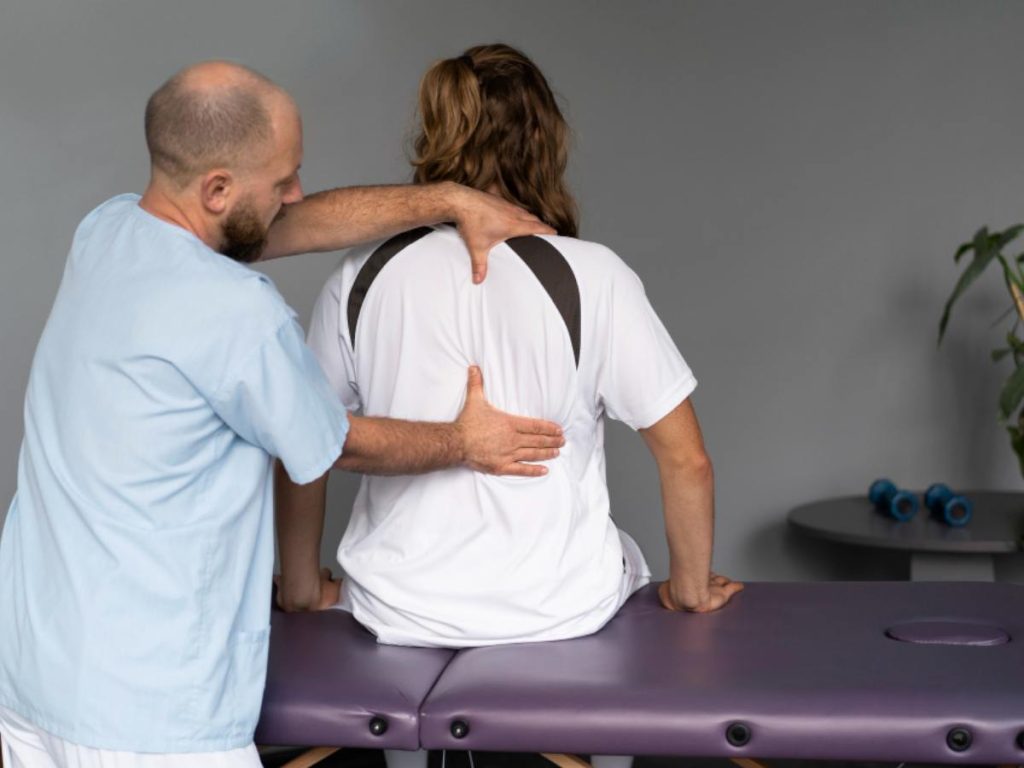
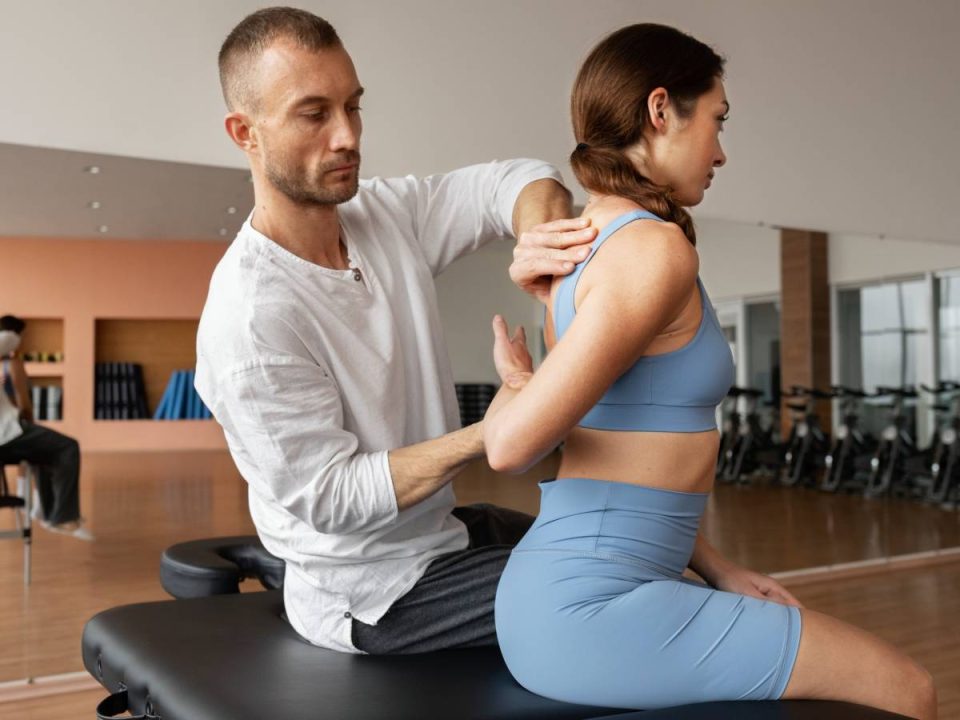
| Manual therapy | Hands-on work that loosens tight muscles and improves movement in the spine | Eases stiffness and helps you move with less pain |
| Nerve and spinal mobilization | Slow, guided movements that help the nerves move more freely through the tight space | Can reduce nerve-related pain, numbness, and tingling |
| Posture and body mechanics coaching | Tips on how to stand, bend, and lift in ways that put less strain on your back | Lowers daily strain on your spine and helps prevent flare-ups |
| Education | Guidance on pacing your activities and knowing which positions help or hurt | Helps you manage symptoms and avoid overdoing it |
| Aquatic therapy | Exercise done in a pool, often warm water | Takes weight off the spine, making movement easier and less painful |
| Traction | Gentle stretching of the spine, done by hand or with a machine | May briefly relieve pressure on the nerves |
Studies show that exercise works best when paired with manual therapy and education, not on its own. A physical therapist can build a plan around your symptoms and adjust it as you improve.
When Exercises Are Not Enough for Spinal Stenosis
Physical therapy helps a lot of people, but it does not work the same way for everyone. It might be time to talk with a doctor if you notice:
- Pain, numbness, or weakness that keeps getting worse, even with therapy
- Symptoms that cut down how far you can walk
- New or worsening weakness in your legs
- Any change in bladder or bowel control, which needs medical attention right away
None of these signs automatically mean you need surgery. They just mean it is worth getting a closer look, which might include imaging or a visit with a rehab specialist. Physical therapy can still be part of your care even if exercise alone is not doing enough on its own.
Final Thoughts
Spinal stenosis physical therapy will not fix the narrowing in your spine, but it can ease pressure on your nerves, build up supporting strength, and make everyday movement feel better. A handful of gentle exercises is a reasonable place to start, and a physical therapist can help you build on that safely.
At Dynamic Spine & Sport Rehabilitation, our team, led by Joe Indrieri, PT, builds treatment plans around each person managing spinal stenosis in the Las Vegas area. Call us at 702-685-1607 or book online to set up an evaluation.
FAQs