
Red Light Therapy for Weight Loss
January 24, 2024
How Does Skin Treatment with Red Light Work?
February 7, 2024
Updated: 05/29/2026
Although, it’s popular for skin health, pain relief, and recovery, many people now ask if red light therapy for eyes is safe. The short answer is that red light therapy is usually safe when used correctly. Problems can happen if you stare directly into the light, use high intensity devices, or skip eye protection.
Join Dynamic Spine & Sport Rehabilitation in Las Vegas (rated 4.7 stars on Google), to learn about eye safety, possible risks, wavelengths used, and whether red light therapy can damage eyes.
Table of Contents
ToggleIs Red Light Therapy Safe for the Eyes?
Red light therapy uses low level light to support cell activity. This process is called photobiomodulation. Most devices use wavelengths between 630 nm and 850 nm.
Research shows that certain wavelengths may support eye cell function when used properly. So, when used correctly, red light therapy is generally safe for the eyes.
However, the eyes are sensitive, so safety matters. To avoid risk, do not:
- Do not direct light straight into your eyes.
- Do not skip recommended treatment times.
- Do not use the device without protective goggles when they are required.
- Do not use devices that are not FDA‑cleared or medical‑grade.
- Do not use very strong devices close to your face.
- Do not exceed the recommended treatment time.
- Do not use red light therapy if you have an existing eye condition without medical advice.
If used incorrectly, red light therapy for eyes can irritate you or cause temporary vision problems.
Can Red Light Therapy Damage Eyes?
Yes, red light therapy for eyes can be damaging if used improperly. Direct exposure to strong LED or laser light can stress the retina. The retina is the light sensitive tissue at the back of the eye.
Potential problems include:
- Eye strain
- Temporary blurred vision
- Light sensitivity
- Eye irritation
Permanent eye damage is rare with low level red light therapy, but it is still possible if high intensity light is used or if someone stares into the light source.
People who should be extra careful with red light therapy in Las Vegas include:
- People with retinal disease
- People with macular degeneration
- People who recently had eye surgery
- People taking medications that increase light sensitivity
If you have eye problems, talk to a doctor before using red light therapy.
- Relieves joint & muscle pain
- Promotes relaxation
- Boosts circulation
- Safe & drug-free
Do You Need Eye Protection for Red Light Therapy?
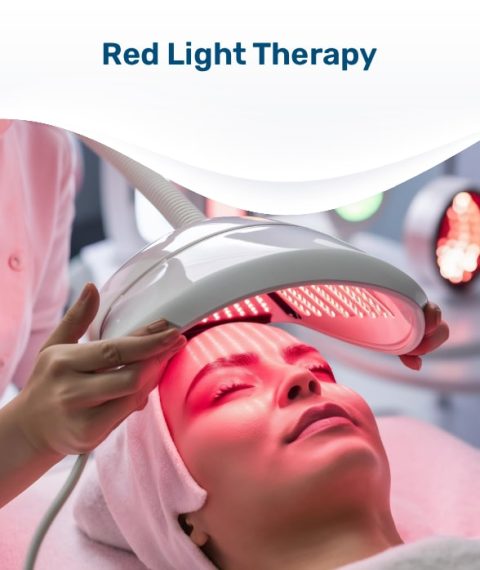
Eye protection is strongly recommended when using red light therapy for eyes. Protective goggles block strong light and help protect the retina. Many LED therapy devices include red light therapy goggles.
Good protection options include:
- Blackout LED therapy goggles
- Laser safety glasses
- Eye shields used in clinics
Closing your eyes may reduce exposure, but it is not the same as wearing goggles. Light can still pass through the eyelids. For facial treatments or full body panels, most clinics advise wearing eye protection during the session. Also, if the device instructions say to wear goggles, follow that guidance.
Do I Have to Close My Eyes During Red Light Therapy?
Yes. If the device is near your face, closing your eyes helps reduce exposure. However, closing your eyes alone is not the safest option. Protective goggles provide stronger protection, especially with high powered devices.
A safer approach is:
- Close your eyes during treatment
- Wear LED therapy goggles when possible
- Do not stare directly at the light source
What Frequency of Red Light is Good for Eyes?
Red light therapy devices use different wavelengths. Some are used for skin. Others are studied for eye health.
Common wavelengths include:
630 nm | This wavelength is often used for skin health and collagen support. It is common in facial LED therapy devices. |
660 nm | 660 nm penetrates deeper into tissue and is widely used in red light therapy panels. |
670 nm | Some research on eye health focuses on 670 nm light. Studies suggest it may support mitochondrial activity in retinal cells. |
This type of research is still developing. Most red light devices are not specifically designed as medical eye treatments.
Near infrared light between 800 nm and 850 nm is also used in therapy devices, but it penetrates deeper and is not typically directed at the eyes.
Read More: Hyperbaric Oxygen Therapy Chamber
How to Use Red Light Therapy for Eyes
Red light therapy for eyes should always be done carefully and professionally. When used properly, this therapy usually involves low‑intensity red or near‑infrared light (around 630–850 nm) to gently stimulate cell activity in and around the eyes.
Here’s how a safe, supervised red light therapy session for eyes is usually done:
- A licensed provider examines your eyes, reviews your eye health, and determines whether red light therapy is suitable for you.
- Clinics use devices that emit safe wavelengths (typically 630–670 nm red light or 810–850 nm near‑infrared light) designed for eye‑area treatments.
- Gently clean your face and eyelids. Remove any makeup, creams, or sunscreen, so the light can reach the skin effectively.
- Always wear protective goggles or eye shields during the session. This prevents any direct light exposure to the eyes themselves.
- The light device is placed about 15–30 cm (6–12 inches) away from your face. Treatments usually last 5–10 minutes per area.
- Relax comfortably with your eyes closed. You may feel gentle warmth, but there should be no pain or discomfort.
- Your clinician might suggest gentle eye drops or a soothing cream if your skin feels dry. Avoid bright sunlight or makeup immediately afterward.
Sessions are typically short, about 3 to 10 minutes. Results may take several weeks to appear. Most patients repeat sessions 2–4 times per week for 4–8 weeks, based on how their eyes respond.
Red Light Therapy for Dry Eyes
Dry eye syndrome is a common problem. It happens when the eyes do not produce enough tears or when tears evaporate too quickly. Some clinics use low level light therapy for eyes that are dry. The treatment targets glands in the eyelids called meibomian glands.
Potential benefits of red light therapy for eyes that are dry may include:
- Improved oil flow in the eyelids
- Better tear stability
- Reduced inflammation around the eyelids
During the treatment, patients wear protective goggles or masks to shield their eyes from direct light exposure. The device is positioned according to guidelines, typically 6 to 12 inches from the eyes. Sessions start short, about 5 to 10 minutes, and increase gradually. However, it is usually combined with other treatments such as warm compress therapy or eyelid treatments.
Red Light Therapy for Under Eye Bags
Red light therapy is commonly used in skin treatments under the eyes. It may help with:
- Mild puffiness
- Fine lines
- Skin texture
This happens because red light may stimulate collagen and improve circulation in the skin. However, it will not remove large under eye bags caused by fat deposits or genetics. Those conditions often need medical or cosmetic procedures.
For the treatment, clinics use specialized red light therapy devices designed for under-eye treatments. Patients wear protective goggles to shield their eyes. The device is positioned 6 to 12 inches away from the face as sessions begin with short durations, gradually increasing.
Does Red Light Therapy Help Eyesight?
Some early research shows that red light might for eye helps visual cells make energy better. It works by supporting the tiny parts of the cells called mitochondria, which keep them healthy. Scientists are studying whether this could help older retinal cells work more effectively.
Possible benefits that are being studied:
- May help eye cells stay healthy as we age
- May support the retina’s energy and protection
- Might reduce mild eye dryness or discomfort
But it’s important to know that red light therapy does not fix vision problems like needing glasses or contact lenses. It’s not a proven medical treatment for eyesight. Only try it near the eyes under guidance from a professional and with proper protection, because using it incorrectly can irritate or harm your eyes.
Can Red Light Therapy Help Cataracts?
Cataracts happen when the lens of the eye becomes cloudy. This usually occurs with aging. There is currently no strong evidence that red light therapy can treat cataracts. Most cataracts are treated with surgery when vision becomes affected. Red light therapy for eyes should not be used as a replacement for medical care.
Side Effects and Warning Signs
Most people tolerate red light therapy for eyes well, but side effects can occur. Possible side effects include:
- Temporary blurry vision
- Eye strain
- Headaches
- Light sensitivity
- Eye irritation
Stop treatment and seek medical advice if you experience these symptoms. They are uncommon but should always be checked by a Las Vegas rehabilitation professional.
The Bottom Line
Red light therapy for eyes is generally safe when used correctly. The main rule is to avoid direct eye exposure and use protective goggles when treating the face. If you are considering red light therapy near the eyes, it is best to use supervised treatment with proper safety guidelines.
At Dynamic Spine & Sport Rehabilitation in Las Vegas, we offer professional red light therapy as part of our recovery and wellness programs. This treatment is performed under expert supervision to ensure safe, effective results for pain relief, tissue healing, and overall performance.
Our specialist, Joe, serves on the Nevada Physical Therapy Board (NVPTB) and is recognized by the American Physical Therapy Association (APTA) and the American Academy of Manual Therapists (AAMT).
Call 702‑685‑1607 or visit one of our 5 location in Nevada State to schedule your appointment.
FAQ
Red light therapy for eyes is usually safe when used properly. Problems can occur if you stare directly at strong lights or skip eye protection.
Yes, direct exposure to high intensity light can irritate the eyes or cause temporary blurred vision. Using protective goggles reduces this risk.
It can be safe when used correctly, but looking directly at the light or lasers can harm your eyes. Always follow safety instructions and avoid shining light straight into your eyes.
Use protective goggles that block red and near‑infrared light, especially if the device is close to your face. Some gentle, low‑intensity devices may not need goggles, but it’s best to follow the manufacturer’s safety guide.
Research is still early. It may help support eye cell health and reduce mild dryness, but it does not improve eyesight or replace medical treatment. Always check with an eye doctor before trying it.








2 Comments
Hi,
How much would a treatment plan of Red Light Therapy cost for a patient of 89 years old ? Thanks.
You a detailed pricing of our Red Light Therapy service, please call us at 702-685-1607, or contact us online at https://dynamicspinesport.com/online-appointment/